| Title | POLYLOOP Sustainable technologies for waste circularity and energy to mitigate climate change. Sub-title: Circular resource reutilisation |
| Area | Engineering sciences and technologies: Chemical engineering, Textile and leather Materials engineering: Chemistry, Materials, Mechanics, Textile and leather |
| Presentation illustration | 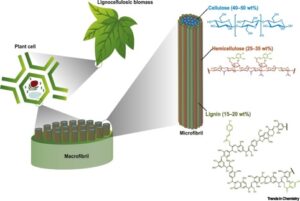
|
| Duration | 1. 7. 2025 – 30. 6. 2028 |
| Funding | ARIS |
| Sub-project head | Prof. Dr. Vanja Kokol https://cris.cobiss.net/ecris/si/sl/researcher/8756 |
| Participating organizations | Nacional institute of chemistry https://www.ki.si/en/ |
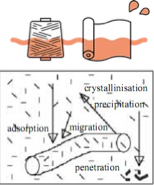
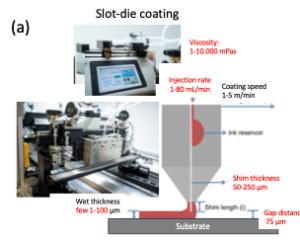
| Objectives | In this sub-project we aim to evaluate and demonstrate the lignin materials as secondary raw materials obtained from wood-based lignocellulose biomass for their upcycling in different technological processes and new applications: (i) production of self-standing films and functional coatings for paper or PLA films by slot-die coating to make products with hydrophobic, UV, NIR and heat protection, antimicrobial, water-vapour and/or oxygen transmission barrier properties; and (ii) formulations for durable finishing of PES and PA fibers / textiles during US-assisted exhaustion or foulard dip-coating, thus to improve their UV protection, Vis-NIR transmission (solar thermal management / heat dissipation), antimicrobial & antioxidant properties, thermophysiological wearing comfort (moisture adsorption and transport, cold-warm feeling sensation), and mechanical strength or elongation. |
| Specific phases and stage of realization | Developing / manufacturing, characterizing, and testing of novel lignin-reach formulations: (i) Stable colloidal dispersion with high enough solid content, viscosity, shear-thinning, viscoelastic & thixotropic properties by co-using of biopolymers (cellulose, fatty acids), solvents (surface tension), rheology modifier, plasticizer, etc. (ii) Stable colloidal dispersion with size & surface chemistry different lignin factions, plasma pre-treated fibers for potential grafting and crosslinking (UV drying), temperature- and co-additives dependent optimization of fibers finishing |
| Bibliographic references | Articles Scientific conference contributions |


GC-0007 POLYLOOP
 vs.
vs.